
The Day the Snow Fell: 70km in Survival Mode

If Post 1 was about getting to the start line, Post 2 is about what happened once the clock started and the snow decided to get involved.
By race morning, it was already clear this wasn’t going to be a normal Marcialonga. Snow had started falling late on Saturday night and didn’t really stop. By the end of the day, around 35cm had come down. On paper, that sounds lovely. In reality, it makes everything harder.
Good snow under your skis is great. Snow falling into your face, your tracks, and your grip zone for eight-plus hours is something else entirely.
The Start: Controlled Chaos
The start was done in waves, and despite the usual chaos, it actually worked pretty well. Thousands of skiers, nervous energy, people shuffling forward, trying not to snap poles or get tangled in someone else’s skis before you’ve even started.
The commentators were doing their thing. If they knew quite how cheesy some of their English sounded, they’d probably cringe — but at the same time, it added to the atmosphere. It felt big. Proper big.
I was still dealing with nerves at this point. The kind where you’re not quite sure if you’re about to race or throw up. Once I actually started moving, though, something clicked. The noise faded. The overthinking stopped. It was time to just deal with what was in front of me.
Ice, Snow, and Taking Your Skis Off
The first part of the race felt like a long procession of athletes all trying to solve the same problems at the same time.
Some of the descents were so icy and so sketchy that it was actually safer — and quicker — to take your skis off and walk down. That’s not something you expect in a ski marathon, but when the alternative is someone piling into you at speed, broken kit or broken body suddenly feels very real.
So there we were. Thousands of people. Skis off. Walking downhill. It sounds ridiculous, but it was the sensible option.
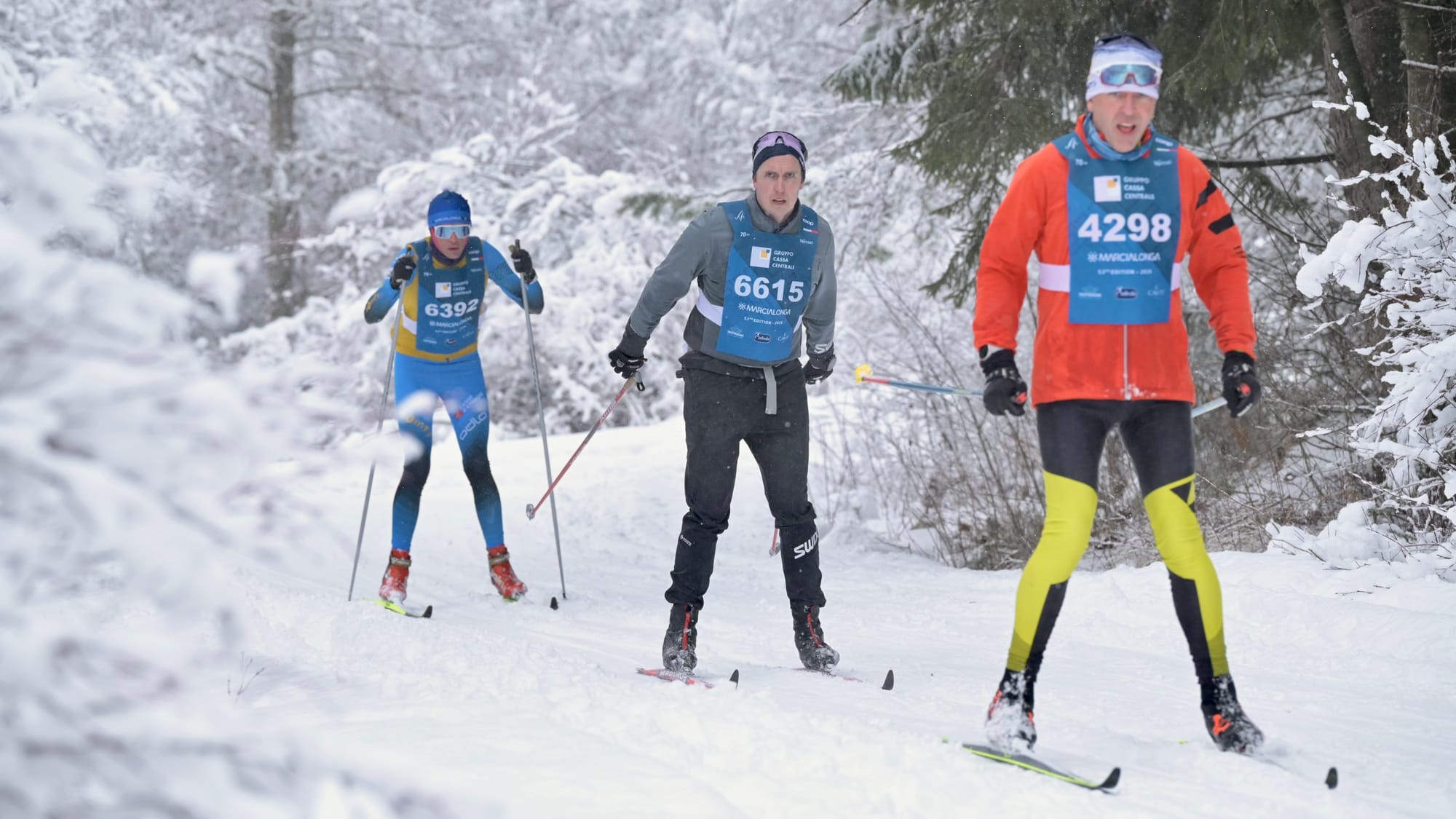
The surface constantly changed. One minute it was mush. The next it was ice. Then rutted, chopped-up snow from the skiers ahead. Staying upright became a full-time job.
Snowfall: The Opponent You Can’t See
The snowfall was relentless. It was sticking to everything. The tracks got slow and sticky very quickly, and they were getting more mashed up by the minute as more skiers went through.
Snow in your eyes is surprisingly intense. Eye protection becomes almost useless because it just fills up with snow anyway. So you end up blinking, squinting, wiping your face, and just accepting that you’re going to look half-blind for most of the day.
It wasn’t dramatic in a cinematic way. It was just relentless. Constant. Background noise you couldn’t switch off.
Aid Stations and Letting Go of Ego
My intention was to stop at every aid station. Not just for food and drink, but to give myself a moment to absorb what was going on around me.
I’d been advised not to treat this as a race, but more as an experience. That turned out to be some of the best advice I received.
There were moments where my heart rate would spike because I’d make some random effort to overtake someone — often someone who was clearly far more experienced than me and probably 30 years older.
At one point, I caught myself desperately trying to pass an 80-year-old woman on ancient-looking skis. That was my cue to wind my neck in, sit in behind her, and let her set the pace. She knew what she was doing. My ego didn’t.
That shift — from racing to managing — made everything better.
The Accidental Double Poling Marathon
The wax technicians had done a brilliant job on glide. The skis ran well.
Grip, however, was another story.
In an effort to stop snow clogging up the grip zone, grip had basically been sacrificed. The upside was that the skis never iced up. The downside was that I had almost no usable grip for diagonal stride.
So I double poled. A lot.
Pretty much the entire course.
If you’ve never done extended double poling, imagine doing thousands of vertical ab crunches while also trying to move forward for 70km. That was not part of the plan. I was not conditioned for that many accidental core reps.
By halfway, my arms, Lats, and core were having some fairly serious conversations with the rest of my body.
Flow State: Just Solving Problems
Somewhere after the early chaos and nerves, I dropped into a strange kind of calm. Not happiness. Not suffering. Just focus.
It felt almost like a zen state. Just solving problems as they came along.
Sketchy descent? Deal with it.
Short sharp climb? Grind it out.
Crowded section? Be patient.
There was no space left for big thoughts. Just small, practical decisions, over and over again.
Through the Villages
The course winds its way through villages, with streets actually covered in snow to make them skiable. On a sunny day, I imagine the place would be absolutely rammed with spectators, cowbells, and noise.
With the weather as it was, only the die-hards were out. A few people clapping. A few shouting encouragement. It meant more than they probably realised.
When you’ve been out there for hours, even a single person cheering feels like a proper boost.
Waiting for the Body to Quit
As the kilometres ticked by — 35, 45, 55 — I kept waiting for my body to properly shut down.
It never really did.
It wasn’t easy, but my head and body stayed in relatively good shape. By the time I saw “15km to go,” it felt almost ridiculous to even consider stopping. After everything it had taken to get there, there was no way I was not finishing.
The Final Climb to Cavalese
The final climb up into Cavalese is infamous.
At this point, it’s barely skiing. It’s just putting one foot in front of the other and trudging uphill. No glide. No rhythm. Just forward movement.
The sound of the finish line commentator slowly got louder. Another switchback. And another. Surely it couldn’t be much further.
It always is.
The Finish: Three Years in One Moment
The final straight, on the main street, was surprisingly flat. I was able to double pole and, for a brief moment, look like I knew exactly what I was doing.
Then I crossed the line.
Within about 30 seconds, it hit me.
Three years of trying to make this happen. Cancelled races. Missed starts. Winter vanlife. Training on scraps of snow. All of it landed at once.
Eyes watering. Slightly blubbing.
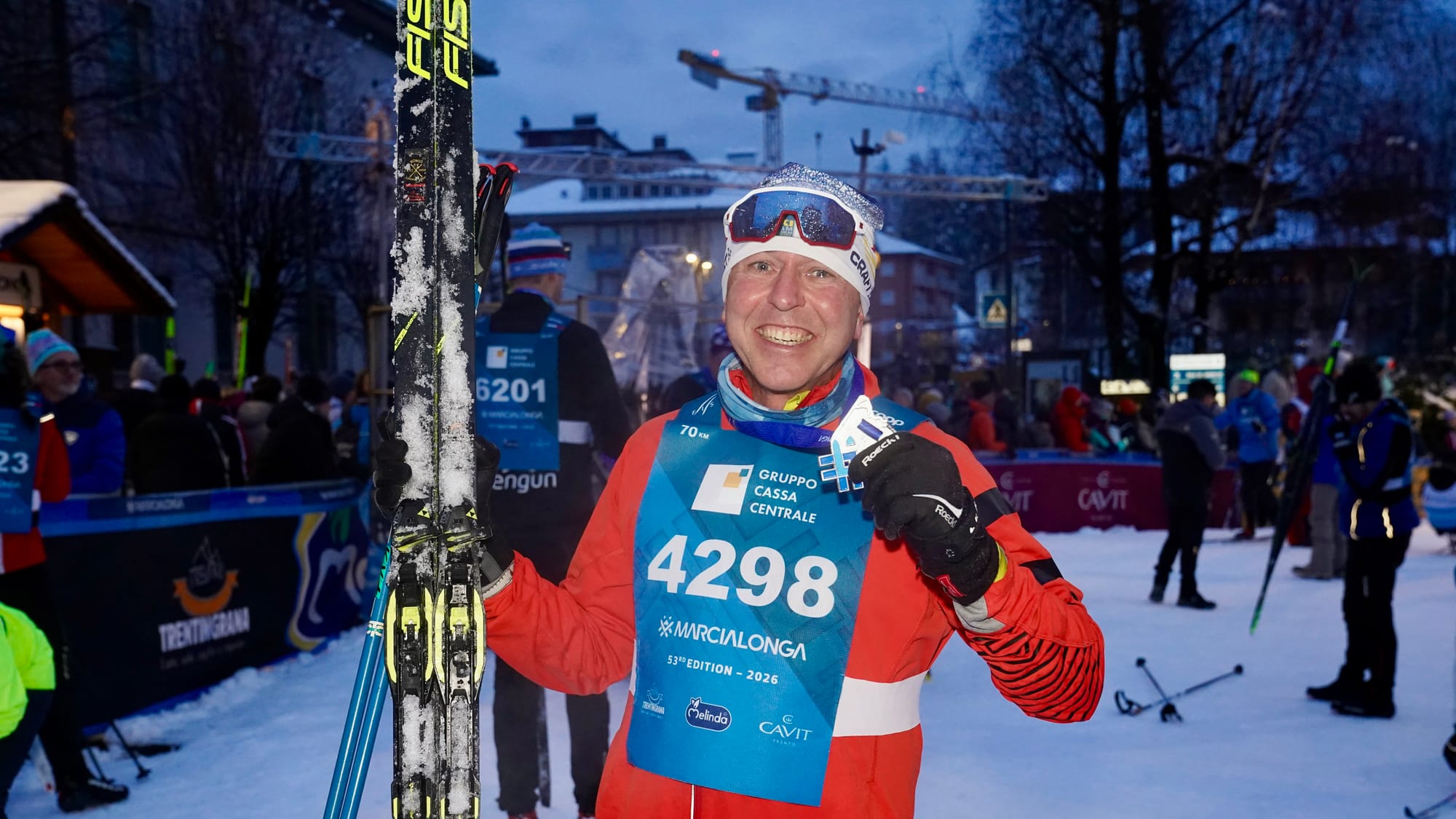
The finish line photographer grabbed me.
“Photo! We make photo!”
I wiped my eyes, put on the most convincing smile I could manage, and he snapped the shot before moving straight on to the next finisher.
And that was that.
The Hardest-Fought Stamp
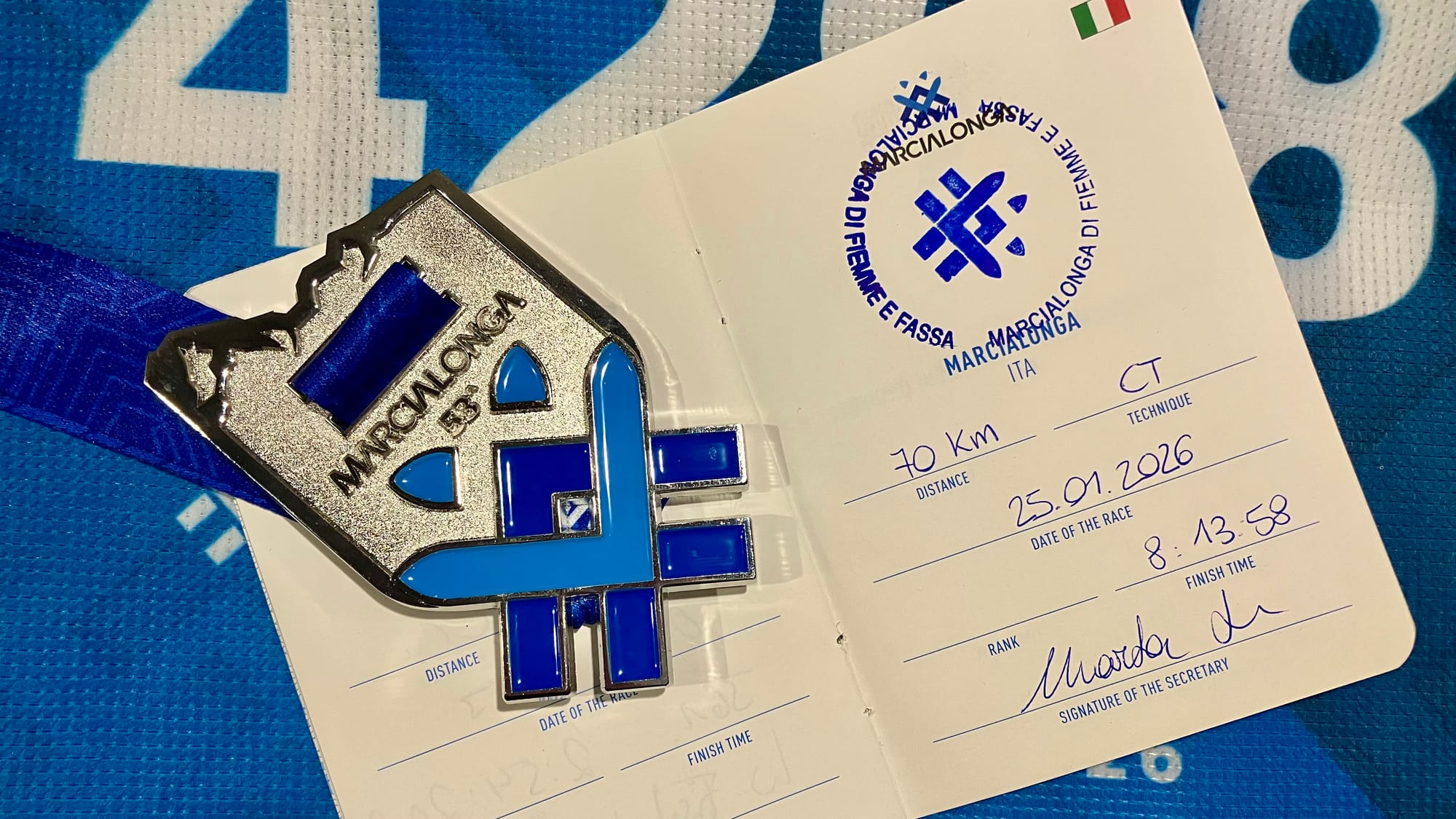
This stamp in my Worldloppet passport has probably been the hardest fought — both in terms of getting to the start line and the race day itself.
In a strange way, the snow felt like poetic justice. If it had been this hard to get there, then of course the day itself was going to make sure I properly earned it.
Not a fast day.
Not a pretty day.
But a day that counted.
Sometimes that’s enough.